

As Uganda prepares to present its progress report on the implementation of the 2022 Universal Periodic Review (UPR) recommendations, the Uganda Human Rights Commission (UHRC) has convened a key meeting with various stakeholders to assess and document the country’s human rights achievements.
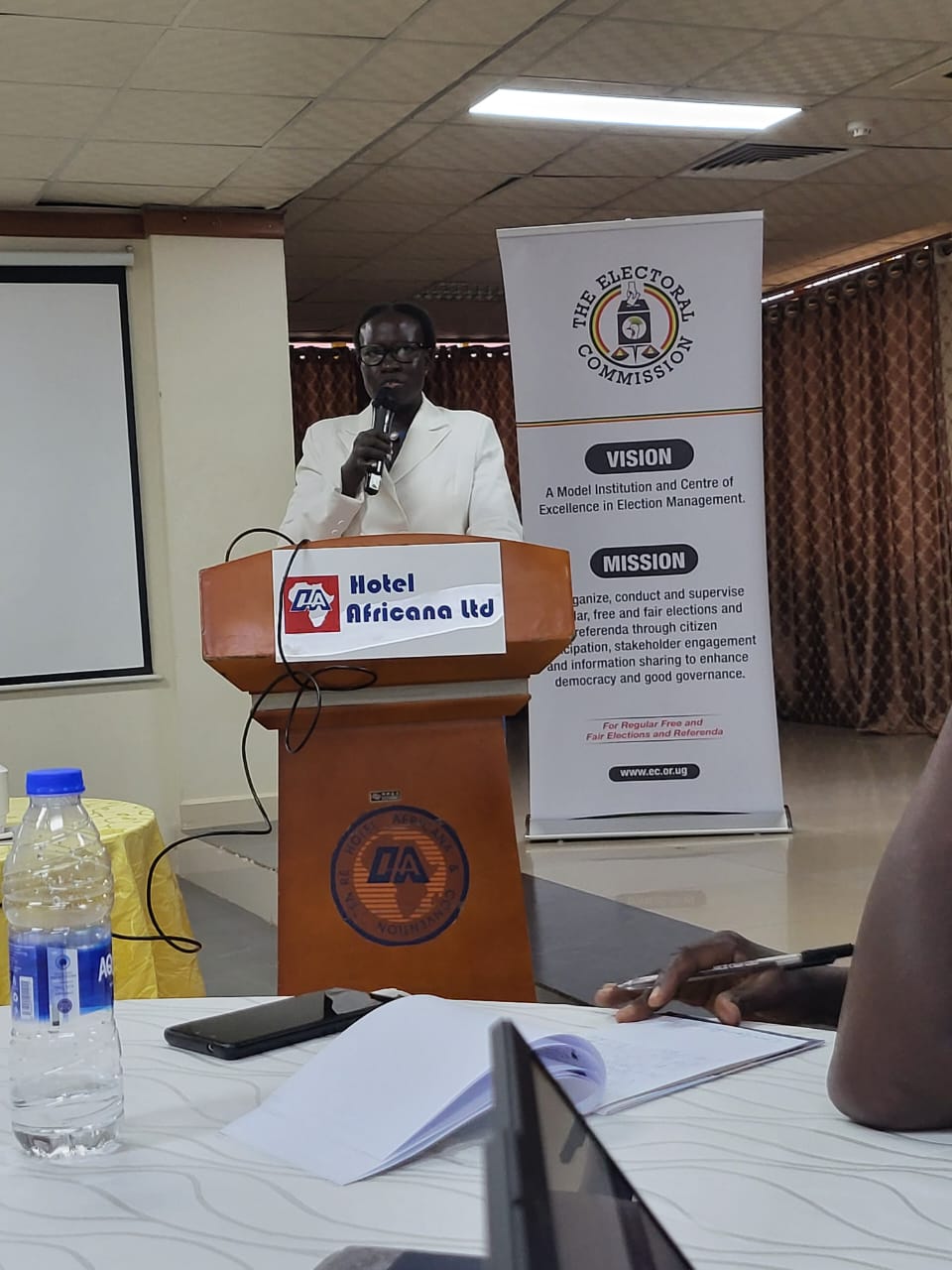
The meeting, held on Monday at Esella Hotel in Kira Municipality, brought together representatives from civil society organizations (CSOs), government ministries and agencies, the judiciary, Uganda Law Society, and academia. Participants shared best practices and strategies for compiling detailed and accurate reports reflecting Uganda’s progress in meeting its 2022 UPR commitments.
“This national conference is a pivotal platform because it allows us to ask the hard questions, listen to each other, and promote collaboration,” said UHRC Chairperson Adv. Mariam Wangadya during the conference’s opening. “The reports we produce must be honest, highlighting improvements achieved. Let’s talk results — lives improved, systems strengthened. Let us debunk the lies by telling stories of the positive changes that have taken place.”
Wangadya noted that Uganda has undergone three UPR cycles: in 2011, 2016, and most recently in 2022. She explained that in 2016, Uganda received 226 recommendations, accepted 148, and noted 78. In the 2022 review, Uganda received 273 recommendations, accepted 139, and noted 134 — registering an acceptance rate of 51 percent.
While some may view this percentage as low, Wangadya emphasized that behind each accepted recommendation lies a concrete commitment, which in turn informs a policy that can meaningfully transform lives.
On the issue of funding, she highlighted that while the Commission’s budget has seen a moderate increase in the past financial year, the current level is still insufficient — especially as the country moves into a new electoral period.
Meanwhile, Ruth Ssekindi, UHRC’s Director of Monitoring and Inspection, emphasized during her presentation that Uganda is accountable not only to its citizens regarding human rights but also to other UN member states globally.
“There are various countries and stakeholders — including CSOs, independent experts, and special procedures — that rely on reports from UHRC to assess Uganda’s human rights performance,” she explained.
Ssekindi reiterated that the UPR is not a routine exercise, but rather a critical UN mechanism that reviews the human rights record of all 193 UN member states every four and a half years — a process that is voluntary but deeply significant.
Uganda’s Human Rights Progress at a Glance
Social Protection: The Senior Citizens Grant now supports over 370,000 elderly persons nationwide.
Poverty Reduction: Through initiatives like the Parish Development Model (PDM), the government has injected UGX 2.5 trillion to spur grassroots transformation.
Gender and Disability Inclusion: The National Action Plan for Women, Peace, and Security is now being implemented in 40 districts — signaling slow but steady progress in breaking down barriers.
Child Protection: The government has intensified action against child labor and trafficking, leading to 2,000 rescues and successful convictions under the Anti-Trafficking in Persons Act.
Access to Justice: Over 250 paralegals have been trained and deployed in remote areas through a partnership between the Uganda Law Society and UHRC.
Pre-Trial Detainee Rights: Thanks to UHRC interventions, pre-trial detainee cases are now being fast-tracked — a significant shift from previous delays.
Report Submission Timeline
The UHRC and civil society organizations are expected to submit their respective reports by June 25, 2026, while Uganda’s national report will be submitted by October 2026, ahead of the next UPR review session.
The Universal Periodic Review is a unique peer-review mechanism under the United Nations Human Rights Council aimed at improving human rights globally through cooperation and dialogue.