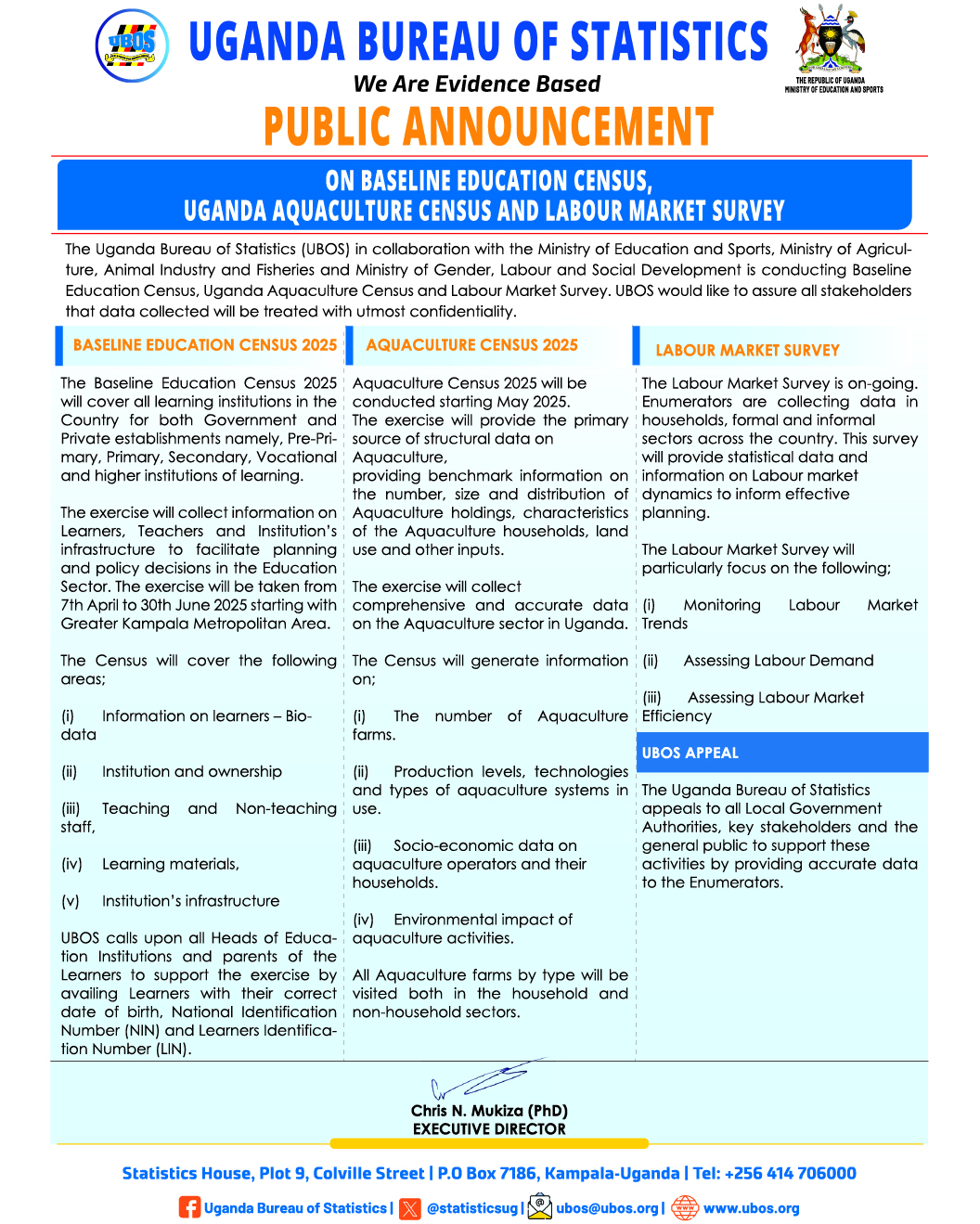


Uganda’s population is on a rapid rise, with projections showing that it could reach 85 million by the year 2050. This projection, released by the Uganda Bureau of Statistics (UBOS) during African Statistics Day, highlights the need for careful planning and preparation to ensure that resources and services can meet the needs of a growing population.
Alongside population figures, the bureau also shared important gender-focused statistics, revealing that inequalities between men and women remain a major concern. Many women still face barriers to accessing essential services, and incidents of gender-based violence continue to persist. These disparities show that despite progress in some areas, there is still much work to do to achieve gender equality in Uganda.
The Minister of State for Gender, Peace Mutuuzo, emphasized the urgent need to strengthen efforts aimed at breaking down these barriers. Addressing gender inequality is not only a matter of fairness but also a key factor in ensuring that the country can fully benefit from the potential of its growing population. Experts warn that without addressing these issues, Uganda may struggle to provide adequate health care, education, and employment opportunities to its rapidly increasing population.
As Uganda looks to the future, the combination of a population boom and persistent gender challenges calls for bold policies, stronger community engagement, and targeted programs to ensure that every citizen—especially women—can thrive. Planning today will determine whether Uganda can transform this population growth into a story of opportunity rather than challenge.