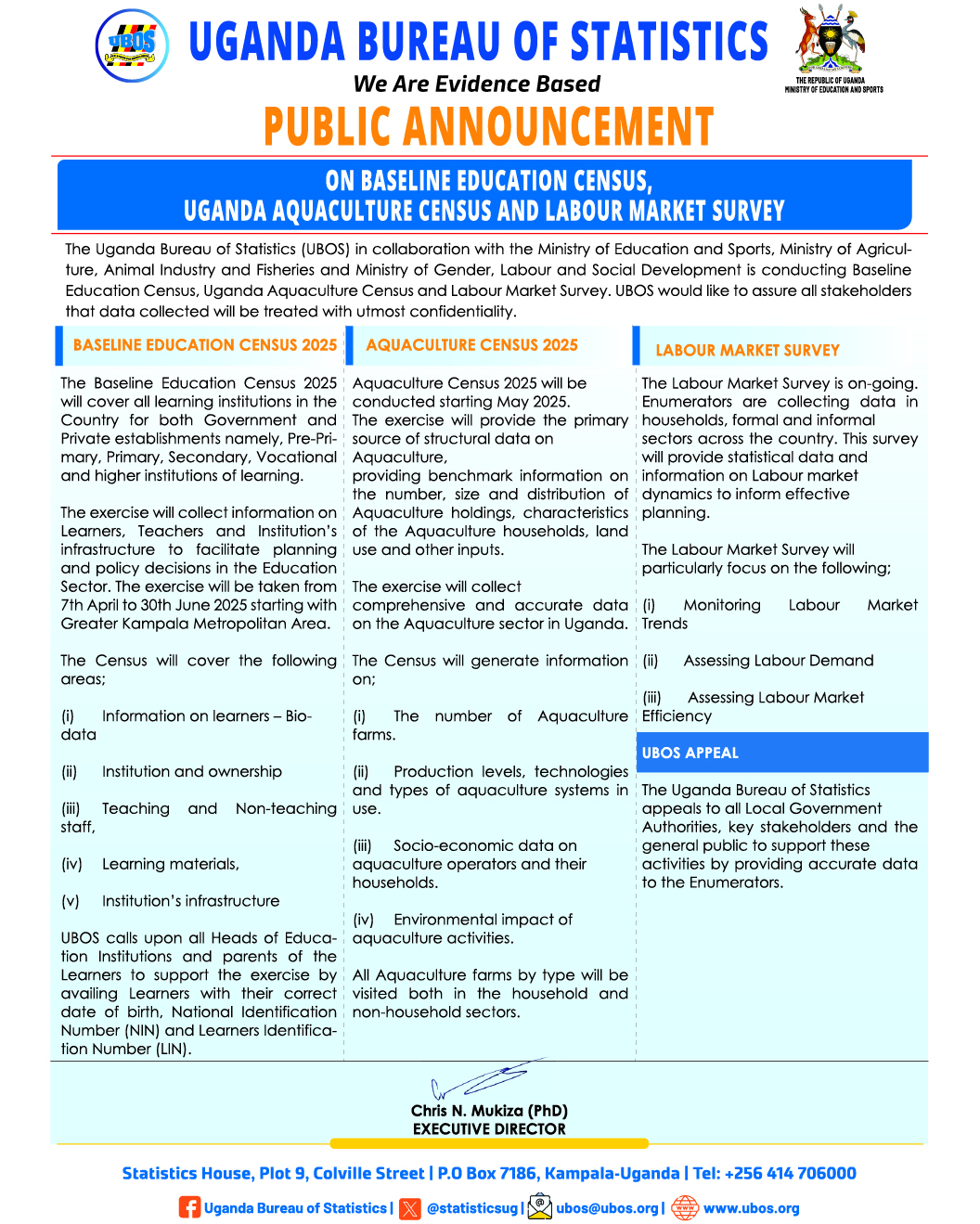

Uganda is facing a growing challenge as the number of children without parents continues to rise. A recent report released by the Uganda Bureau of Statistics (UBOS) has revealed that about 2.873 million children aged 0–17 are orphans. This represents 13% of the country’s child population. These figures were shared during the launch of the Orphans and Other Vulnerable Children (OVC) report at the UBOS headquarters in Kampala, drawing attention to an issue that affects millions of young lives.
According to the report, Uganda’s total child population stands at 22.15% based on the 2024 National Census. While a majority of children—about 86.3%—still have both parents alive, the large number of orphans highlights a serious social concern. The report defines an orphan as a child who has lost either one parent or both. In some cases, children do not even know the survival status of their parents, making their situation even more uncertain and difficult.

The report also sheds light on the lives of older children aged 10–17 years, who number over 9 million. Among them, 6.7%—more than 600,000 children—have been married or are currently married. This revelation shocked many people, as it shows how early marriage is still affecting children in Uganda. Even more concerning is that orphaned children are more likely to be married early, with 9.5% compared to 6.1% among non-orphans. Regions like Karamoja, Sebei, and Lango recorded the highest numbers of these cases.
Girls are especially affected. Out of 4.6 million girls aged 10–17, around 68,787 are already mothers. This means about 1.5% of girls in this age group have given birth. Some regions, such as Bunyoro and Rwenzori, recorded even higher percentages. In certain districts like Namayingo and Buvuma, the numbers are extremely high, showing how serious the issue of child motherhood has become.
Leaders and organizations have stressed the importance of using this data to improve the lives of vulnerable children. Representatives from UNICEF praised UBOS for providing clear and detailed information that can help guide decisions and policies. They explained that without accurate data, it is difficult to create effective programs that protect and support children.
Government officials also highlighted that the findings will help Uganda meet its commitments to international child protection agreements. They called on all stakeholders to use this information to improve planning, strengthen services, and ensure that every child has a better future.
In simple terms, the report is a wake-up call. It shows that while many children in Uganda are growing up in stable families, millions are facing serious challenges. Addressing these issues will require strong action, better support systems, and a shared commitment to protect the country’s most vulnerable children.