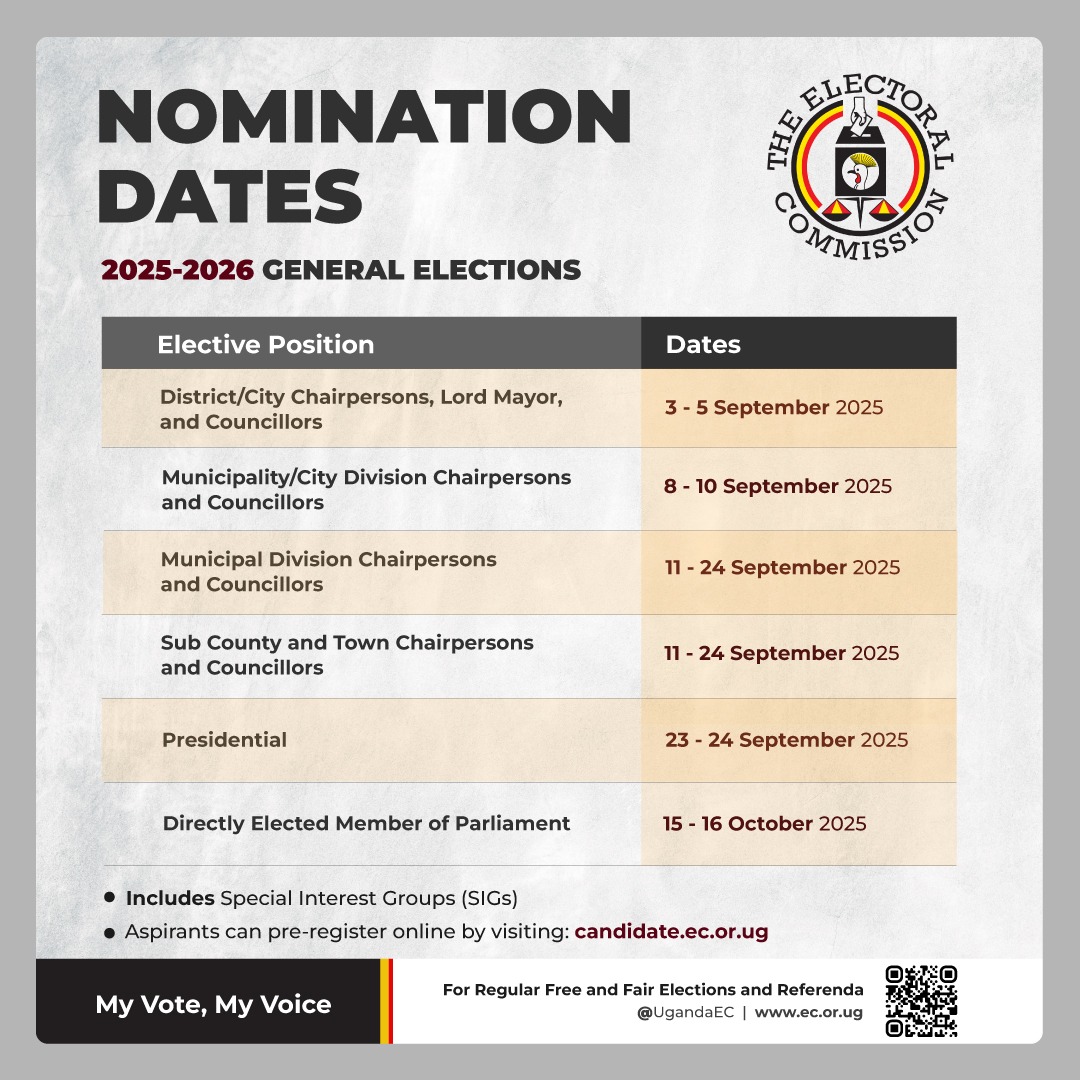

As Uganda prepares for a heated election season, political discussions are growing louder across the country. With nominations for Members of Parliament (MPs) set for August and September, many citizens are wondering: how are MPs divided across Uganda’s regions?
Uganda has four main regions—Eastern, Western, Northern, and Central. Each region is made up of several constituencies, and each constituency elects one MP. On top of that, every district has one woman MP, and a few MPs are chosen to represent special groups such as youth, persons with disabilities, and the army.
According to official data from 2021, the Eastern Region has the highest number of MPs in the country. This area includes sub-regions like Elgon, Kiira, and Teso. Eastern Uganda has a total of 144 MPs—101 from constituencies, 3 for special groups, and the rest are district women representatives. This high number could make Eastern Uganda a key battleground for political parties in the 2026 elections.
In second place is the Western Region, which has 135 MPs. This region covers South-Western Uganda, Mid-West, and Bunyoro/Albertine. Out of these, 93 are from constituencies, 3 represent special groups, and the rest are women MPs. The strong numbers here mean the West also plays a big role in national politics.
The Northern Region, made up of areas like Acholi, Lango, West Nile, and Karamoja, has 127 MPs. This includes 83 from constituencies, 3 for special groups, and the remaining are women representatives. Despite its history of conflict and underdevelopment, the North now has a strong voice in Parliament.
Surprisingly, the Central Region, which includes the capital Kampala and the Greater Buganda area, has the fewest MPs—only 105 in total. Of these, 76 come from constituencies, 3 represent special groups, and the rest are women MPs. This lower number may come as a surprise given the region’s economic and political influence.
These figures show how power is shared across Uganda and how regional strength can affect national decisions. As we head toward the 2026 general elections, knowing where most MPs come from helps both voters and political parties understand where to focus their energy. It also shows that every vote counts—especially in regions with high MP numbers that can shift the balance of power in Parliament.
So, as politicians hit the campaign trail, all eyes may be on Eastern Uganda—where the numbers are high, and the stakes even higher.