
By Denis Mbassa | 29th September 2025
Uganda’s political scene is vibrant yet often challenging, and the path to elective office is never straightforward. For women, the journey can be especially difficult. Beyond the structural barriers and common campaign hurdles lies a more subtle but powerful obstacle: the use of legal processes to block female candidates from competing.
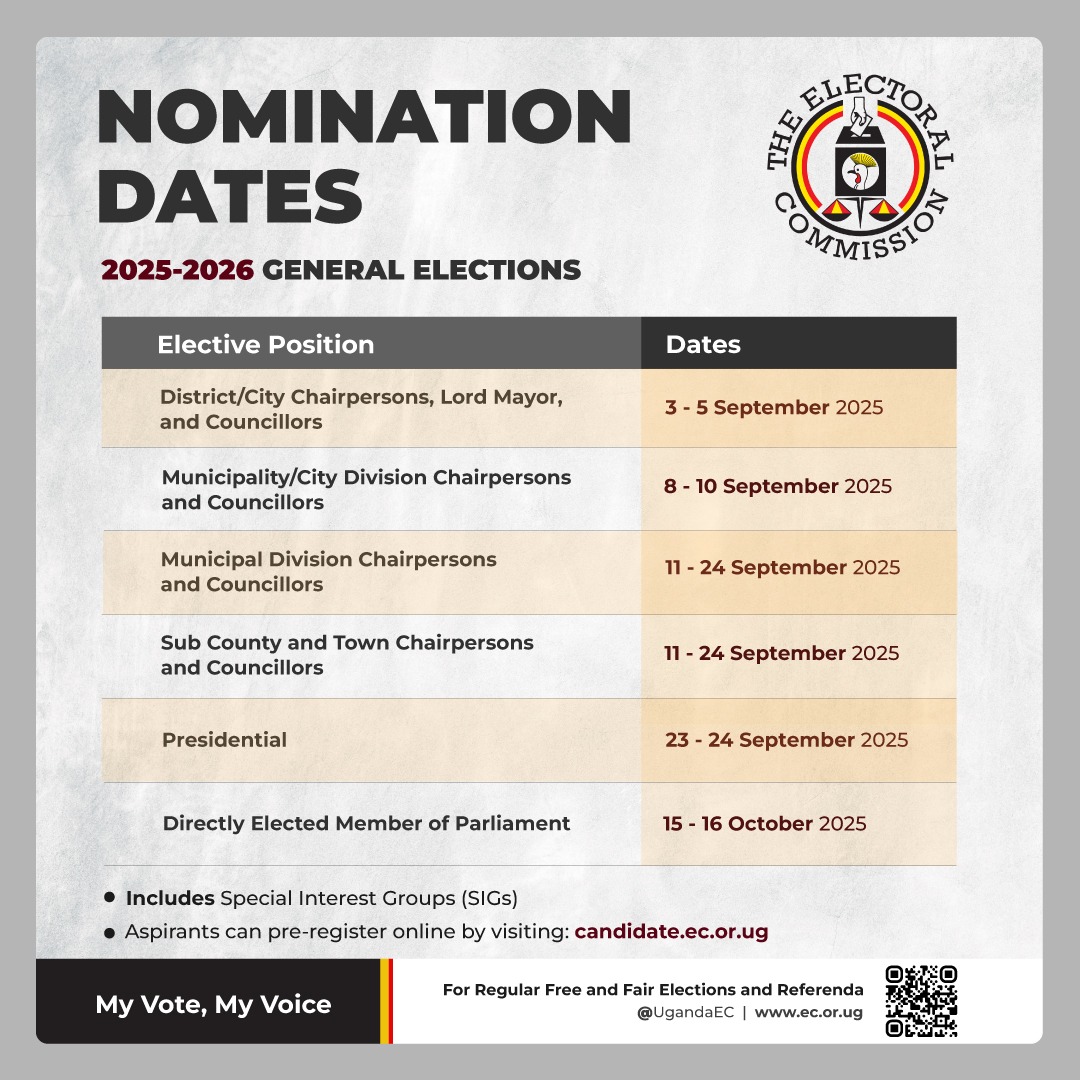
A worrying trend has emerged where court cases and injunctions are strategically timed to coincide with critical stages of the electoral calendar. Consider the case of Hellen Odeke Akol, who has repeatedly faced legal challenges every time she announces her candidacy for the Bukedea District Woman MP seat. In both the 2021 general elections and the NRM primaries earlier this year, litigation delayed her participation. In neither instance was she found legally unqualified; rather, the timing of the legal process ensured she was excluded from crucial nomination windows.
More recently, Odeke has been joined by two other women candidates—Susan Norma Otai and Marion Mercy Alupo—from different political parties. All three have faced a case filed by the same individual, Zipporah Akol, who also challenged Odeke’s candidacy in 2021. The claims are identical: the women are alleged not to be residents of the villages where they registered to vote. Alarmingly, the suits cite tribunal decisions that the candidates were never summoned to attend.
This raises serious concerns about fairness, justice, and the integrity of Uganda’s democratic process. While courts are essential for ensuring only qualified candidates contest elections, there is a thin line between judicial oversight and manipulation of legal procedures to eliminate political rivals.
The Perils of Legal Engineering
The pattern is consistent: cases filed just before nomination deadlines, temporary court orders granted, and hearings adjourned past key deadlines—or quietly withdrawn after causing political damage. The effect is exclusion by default, not by law, but by delay.
Such tactics exploit the nature of injunctive relief. Courts grant these orders to preserve the status quo while cases are decided on merit. But when injunctions are used without compelling evidence, especially when they infringe on constitutional rights like the right to contest elections, they become tools for political control rather than instruments of justice.
Even more concerning is the reliance on fictitious tribunal findings. If no hearings were ever conducted, and no summons issued, citing these “decisions” misleads the courts and undermines public trust in the judicial system.
Democracy at Risk
Article 38 of Uganda’s Constitution guarantees every citizen the right to participate in governance. Using procedural technicalities to disqualify candidates undermines this right and weakens the foundation of inclusive democracy.
The problem is even more pronounced for women, who already face systemic barriers in politics. Targeting them through legal loopholes threatens individual ambitions as well as the broader goal of gender equity in leadership.
The Role of the Judiciary and Political Parties
Judges must remain independent, but the trend of politically timed litigation cannot be ignored. Institutions like the Judicial Service Commission and the Electoral Commission need to monitor how courts are used in pre-election periods and consider stronger safeguards against manipulation.
Political parties also bear responsibility. Disputes based on alleged “tribunal” decisions or party registers must follow transparent and fair procedures. Proper internal due process strengthens trust in both party primaries and national elections.
Conclusion: The Need for Reform
This is not an isolated incident. It illustrates how legal processes, when misused, can erode democracy from within. If unchecked, such practices may set a precedent where access to the ballot depends on political maneuvering rather than law.
Uganda’s legal and political institutions must confront this challenge. If courts are seen as gatekeepers of exclusion rather than defenders of participation, the principles of free and fair democracy will be seriously compromised.
Disclaimer: This article does not comment on the merits of any ongoing legal proceedings. All individuals are presumed innocent, and all legal claims are subject to due process.
(The writer is an Advocate of the High Court of Uganda and a leading Women’s Rights Activist.)