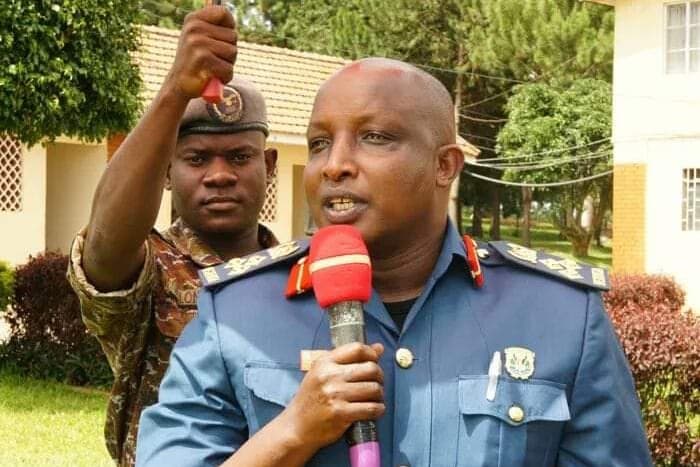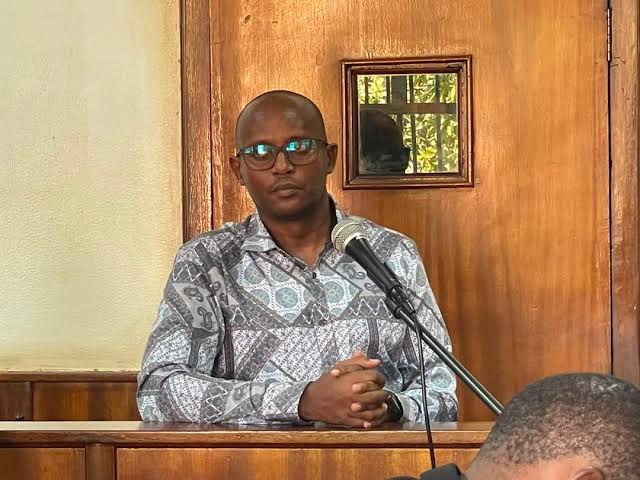

In his 26th June letter, President Museveni directed the IGG Aisha Naluzze Batala to commence investigations into the conduct of three Works Ministry engineers namely Edwin Raymond Kiyaga, Patrick Muleme and Dickens Ahimbisibwe. He says the three are responsible for the criminal design and route alterations which resulted into the total cost for the 23.6kms Busega-Mpigi road project changing from Shs600bn to Shs1.3trn.
Museveni also demanded that the Works Ministry PS Mzee Waiswa Bageya steps aside as Under Secretary Barbara Namugambe takes charge in acting capacity until the IGG investigations are completed. Museveni was angry that only 40% of the road works had been delivered yet the entire Shs600bn, which had been budgeted to be the total project original cost, had been spent.
The President accused the three engineers of conniving to alter the routes the road project was to pass, diverting the road into the direction where they had personal land so that they could become Project Affected Persons (PAPs) and become entitled to being compensated for lost land.
Ironically, all the PAPs-related compensation had been made, under the old arrangement, prior to the trio’s criminal alteration of the route. Their criminality partly explains how the project’s overall cost grew from Shs600bn to Shs1.3trn. In his letter, Museveni declares the trio to be ‘thieves’ who must be ‘destroyed’ by the IGG using her prosecution powers.
The Busega-Mpigi Expressway project comprises of the 23.6kms which is to be four lanes; the 20kms of access roads, four interchanges and the tolling infrastructure.
One of the more than 15 public infrastructure projects which the African Development Bank (AfDB) is currently funding/supporting in Uganda, the Busega-Mpigi road is part of the Northern Corridor Infrastructure projects as it connects Kampala to Western Uganda and eventually facilitate trade with Rwanda and DR Congo. This explains why the President is very angry with PS Bageya’s failure to do effective supervision, which created room for the three engineers to act fraudulently.
Convinced there was need to find additional money to cater for the shift from Shs600bn to Shs1.3trn, the Cabinet had last August approved the proposal to return to the AfDB for more loans (equaling 188.8m Euros), something Parliament also approved on 29th October the same year.
The Bank’s Governing Board formally granted the request last November on 19th to be exact. This was the only way the contractor (China Civil Engineering Construction Corporation in JV with China Railway 19th Bureau Group Uganda Ltd) would be convinced to resume the civil works.
THE AG’S FINDINGS:
The contractor had stopped and abandoned the project protesting the GoU’s failure/refusal to pay them for the previously certified/issued Interim Payment Certificates (IPCs) which becomes the basis for the delivered works to be remunerated.
According to Auditor General’s findings, as of the time of abandoning the civil works site (12th August 2025), the Works Ministry, which is the project implementing agency, having taken over from UNRA, had accumulated unpaid arrears amounting to Shs98,736,335,067. This was the position as at 30th June 2025. This unpaid money related to IPCs 31-37.
The AG’s report shows that on 9th July 2025, the contractor wrote to the Works Ministry (Ref: CCECC&CR19/UBM/2025/296) and reminded the Ministry officials that the GoU’s failure/refusal to pay up the owed billions had accumulated unpaid interest of Shs7,284,663,105.
The contract that the Chinese contractor signed with UNRA in 2019 indicated that every IPC claim had to be settled or paid within 42 days after its issuance or else it would attract interest. The AG’s report indicated that such suspension of civil works by the contractor, as a result of the implementing agency’s failure to make prompt payments, hurt the credibility of the GoU besides escalating the project costs and depriving the intended beneficiary communities of the chance to enjoy service delivery and other economic benefits.
The AG findings, contained in Edward Akol’s report to Parliament dated December 2025, showed that as early as June 2024, the money (the Shs600bn) had been exhausted, leaving the contractor with no option but to begin threatening suspension of civil works after the executing agency didn’t demonstrate any readiness to keep making prompt payments.
The AG advised the accounting officer to do all he can to ensure that the contractor gets paid to avoid further delays of the project which originally was supposed to be completed at the beginning of 2024. The Works Ministry at some point blamed the AfDB for suspending disbursements of money for the project following the shutting down of UNRA, the original executing agency, whose mandate and all pending projects was passed on to the Works Ministry. Apparently, AfDB had been used to comfortably dealing with UNRA, which was considered to be more efficient.
The AG report further shows that under the FY2024/2025, Shs59,509,301,247 had been budgeted and approved for Busega-Mpigi road project yet only Shs34,897,732,538 was actually availed; creating a shortfall of Shs24,611,568,709 (58.64%)!
Whereas the GoU was supposed to avail counterpart funding of Shs2,471,081,247; as much as Shs2,753,981,879 (104.16%) ended up being received or availed. Yet for the AfDB/donor, the approved budget was Shs57,038,220,000 and only Shs32,323,750,659 (56.67%) was availed. This was so because the AfDB slowed down disbursement over concerns relating to the controversial transitioning of the executing agency status from UNRA to the Works Ministry. This under-disbursement by AfDB had the effect of slowing down overall project implementation.
The Auditor General’s report also at length elaborates on the huge PAPs compensation, which the President now says caused the entire problem, something for which he wants the three ill-fated engineers to be hanged. The AG report illuminates the fact that the project had a total of 4,223 PAPs approved with a total of Shs167,782,482,641 being designated for their compensation.
The AG finds that as of 30th June 2025, a total of 2,585 PAPs had been compensated with the GoU parting with Shs111,747,205,864 to settle their claims so that the right of way for the road project would be secured. The AG confirms that as of 30th June 2025, a total of 1,638 PAPs remained unpaid and their total claim stood at Shs56,035,276,777.
The officials at Works as of that time were counting on supplementary funding that was being expected to come through Cabinet and Parliament to avoid further delays in project implementation. The AG notes that as of that time, it was very clear that project overruns were going to make the Busega-Mpigi project more expensive and thereby delaying its completion.
As early as that time, the AG urged the leadership at the executing agency (namely the Works Ministry) to liaise with the Finance Ministry to ensure that money was quickly found for the right of way to be secured and to also engage the Ministry of Justice to find a way of expediting the resolution of Court disputes, in relation to which some of the PAPs were refusing compensation.
Some of the compensation was delaying, and thereby impacting the right of way, because of the wrangling among family members and also between landlords/registered land owners and bibanja people. The AG report also makes reference to the Shs3.1bn and $3.4m for design review/supervision and another $137,000 plus Shs247,940,000 for the technical audit as some of the monies whose absence was complicating the project as at 30th June 2025.
The report also talks about the pipeline project study and the signalization of the Namungoona-Nansana-Wakiso-Kakiri part and the relevant works which hadn’t been undertaken as 30th June 2025.
Not even the relevant procurement activities had been undertaken, which shows ineptness on the part of the authorities at the Works Ministry. As a result of everything not being done on time, the GoU had incurred commitment charges deriving from undisbursed balances totaling to $1,676,296 as at 30th June 2025.
Ironically, the Busega-Mpigi project had been on since the 2019 and every passing year has seen the GoU, the principal borrower of the AfDB funds, incur growing sums in commitment charges. And gratefully, the AG has over the years been flagging these concerns in audit reports, only for his concerns not to be given adequate attention by the concerned authorities.
PROJECT BACKGROUND:
As a way of the background to the project, the AG report shows that this whole project loan from AfDB technically began or became effective on 6th March 2017. The civil works originally started on 22nd November 2019 and the project was expected to be completed on 31st December 2025, latest.
The original cost of the project was $192,238,206; with $41.2m from GoU as counterpart funding, $91m from AfDB and another $60m from AfDB also. The overall objective was to reduce traffic costs and travel times for passengers and goods between Kampala & Mpigi; create reliable movement link between Kampala & Mpigi to serve the immediate needs of travelers in that rapidly-growing part of Uganda.
Under procurement reference No. UNRA/WORKS/16-17/00070, the original contract UNRA signed with the two Chinese JV partners was to cost Shs548bn and this was signed on 22nd November 2019.
In November 2021, new designs for the same project emerged and the cost was escalated to much higher before finally being settled at Shs1.3trn in March 2023.
Yet as at May 2024, the Auditor General established that up to Shs600bn had been expended with only 40.86% of the project work being completed. And late last year, Cabinet and Parliament cleared the borrowing of an additional Euros188.18m for the same project, a request the AfDB Governing Board approved last November.