
Uganda’s labor market is facing a major crisis, with nearly nine in ten Ugandans working in the informal sector, according to new data from the Uganda Bureau of Statistics (UBOS). The recently released Labour Market Survey 2025 paints a grim picture of an economy struggling to create stable and high-quality jobs for its growing workforce. Despite the country’s working-age population of 26.4 million, an alarming 87.6 percent of the workforce is employed without formal contracts, social security, or any regulatory protections. When agriculture is included, that figure rises to nearly 90 percent. These statistics highlight deep concerns about labor underutilization and job instability, which are having a significant impact on the country’s economic growth and development.
The findings of the survey are concerning, showing that while Uganda’s official unemployment rate stands at 12.2 percent, the measure of labor underutilization — those working in low-productivity jobs or facing unmet employment needs — is much higher, at 41.6 percent. This figure paints a much darker reality, suggesting that many people are working in jobs that do not provide them with the security or income needed for a decent standard of living. One of the most worrying trends is the high level of underutilization among young people, particularly those aged 15 to 19. A staggering 58.3 percent of youth in this age group are considered to be underutilized in the labor market, pointing to a serious mismatch between the skills young people are acquiring and the jobs available to them.

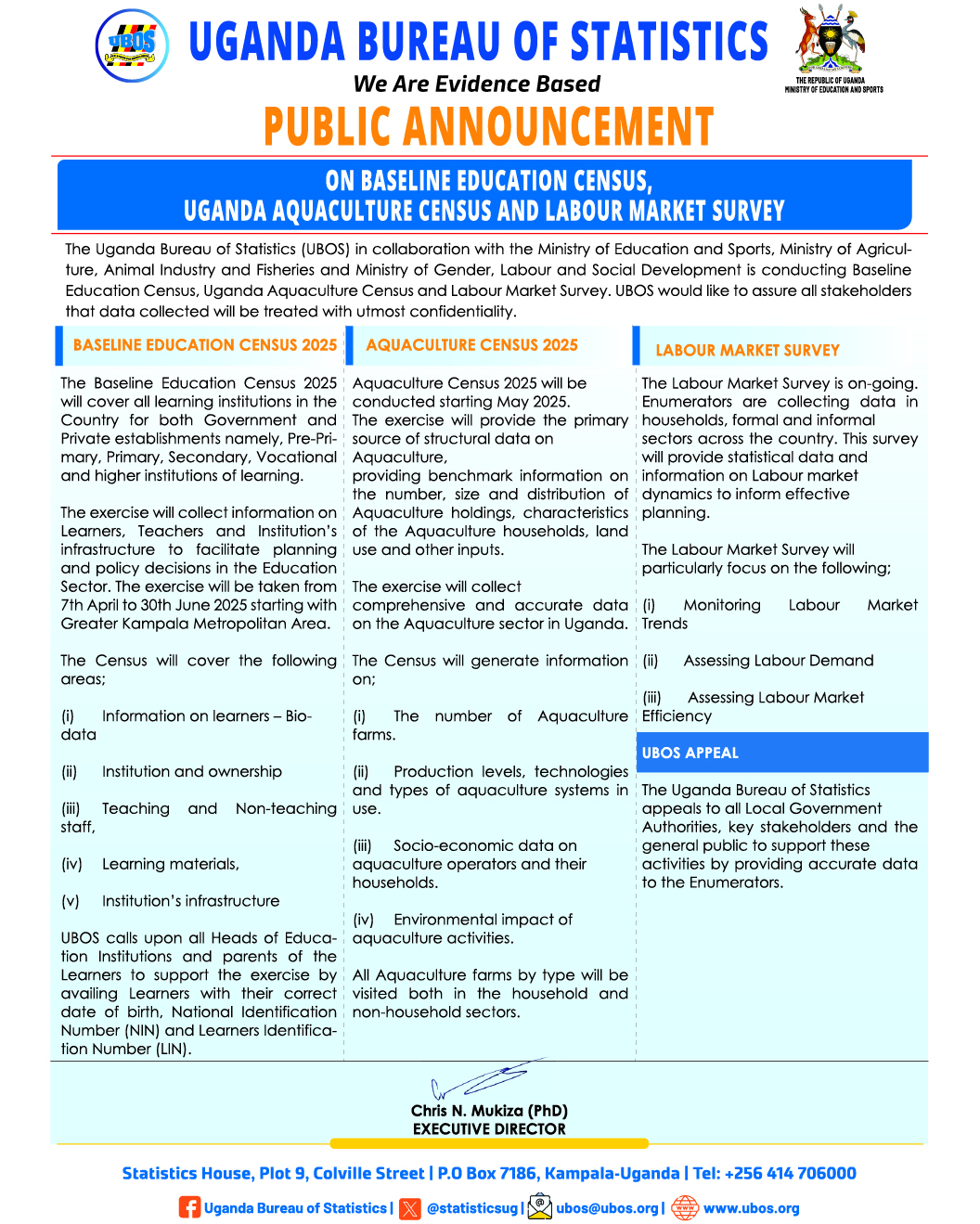
Chris Mukiza, the Executive Director of UBOS, explained that the survey was conducted to address the increasing demand for labor statistics and to provide a clearer picture of the labor market. He also emphasized that the data would help policymakers and researchers design more effective strategies to boost employment and foster inclusive economic growth. However, the findings also highlight the challenges Uganda faces in creating quality jobs. While the informal sector is providing employment to the vast majority of the population, these jobs are often low-paying and lack stability, which means workers are left vulnerable to economic shocks and lack access to social benefits like healthcare and retirement savings.
Gender inequality remains a significant issue in Uganda’s labor market. The survey found that male participation in the labor force stands at 59.5 percent, far outpacing female participation, which is only 43.4 percent. This gender gap in employment is concerning, as it suggests that women are facing additional barriers to entering the workforce, including societal norms and limited access to education and training opportunities. Furthermore, the report highlighted that formal employment opportunities remain heavily concentrated in Uganda’s central region, particularly in the capital city of Kampala and the surrounding Buganda region. In contrast, rural areas are struggling with high rates of unemployment and underemployment. Some regions, such as Bukedi and Teso, have reported unemployment and labor underutilization rates exceeding 50 percent, underscoring the disparities between different parts of the country.
The report also gives a detailed look at the informal sector, which remains the dominant source of employment for Ugandans. UBOS researchers sampled nearly 5,000 informal businesses across more than 1,000 areas and found that informal trade is the largest employer in this sector, accounting for more than 53 percent of informal business employment. However, working in the informal sector often means facing insecurity, as workers have no formal contracts or legal protections. This leaves them vulnerable to exploitation and without any safety net in times of economic hardship. For the millions of Ugandans in the informal sector, access to healthcare, pensions, and job security remains out of reach, and the lack of formal employment means that many are unable to save for the future.
On the other hand, the formal sector, which employs just 2.37 million people, offers more stability but is also shrinking. The survey revealed that more than 46,000 formal jobs were lost during the survey period due to layoffs and downsizing, highlighting the volatility even within the formal sector. This trend suggests that while formal jobs may offer better benefits, they are not immune to the challenges of a changing economy and the pressures of the global job market. The loss of formal jobs further intensifies the labor crisis, as it reduces the number of stable employment opportunities available to the workforce.
The data also points to a stark contrast between the opportunities in formal and informal sectors. While the informal sector offers many jobs, it fails to provide adequate compensation or long-term stability. Meanwhile, the formal sector, though more stable, is not growing fast enough to absorb the increasing number of people seeking employment. This imbalance presents a major challenge for Uganda’s economy, which struggles to create enough high-quality jobs to meet the needs of its rapidly expanding population.
This labor market crisis is not just a problem for the workers themselves; it also has significant implications for Uganda’s broader economic growth. With millions of workers trapped in low-productivity, informal jobs, the country faces a challenge in increasing productivity and improving living standards. Until these structural imbalances are addressed, Uganda’s economy will continue to struggle to create the conditions needed for inclusive growth.
The findings of the Labour Market Survey 2025 call for urgent action from both the government and private sector. Policymakers need to focus on creating more formal job opportunities, especially in rural areas, while also addressing the gender gaps in the labor market. Providing better support for youth employment and vocational training can help bridge the gap between education and the available job market. Additionally, improving labor protections and creating incentives for businesses to formalize their operations will help ensure that workers in the informal sector are not left behind.
As Uganda grapples with these challenges, the Labour Market Survey 2025 provides crucial insights that can guide future policy decisions and drive reforms aimed at tackling the country’s employment crisis. For the millions of Ugandans currently stuck in informal, low-paying jobs, there is hope that these findings will lead to meaningful changes that can help build a more stable and prosperous labor market for all.