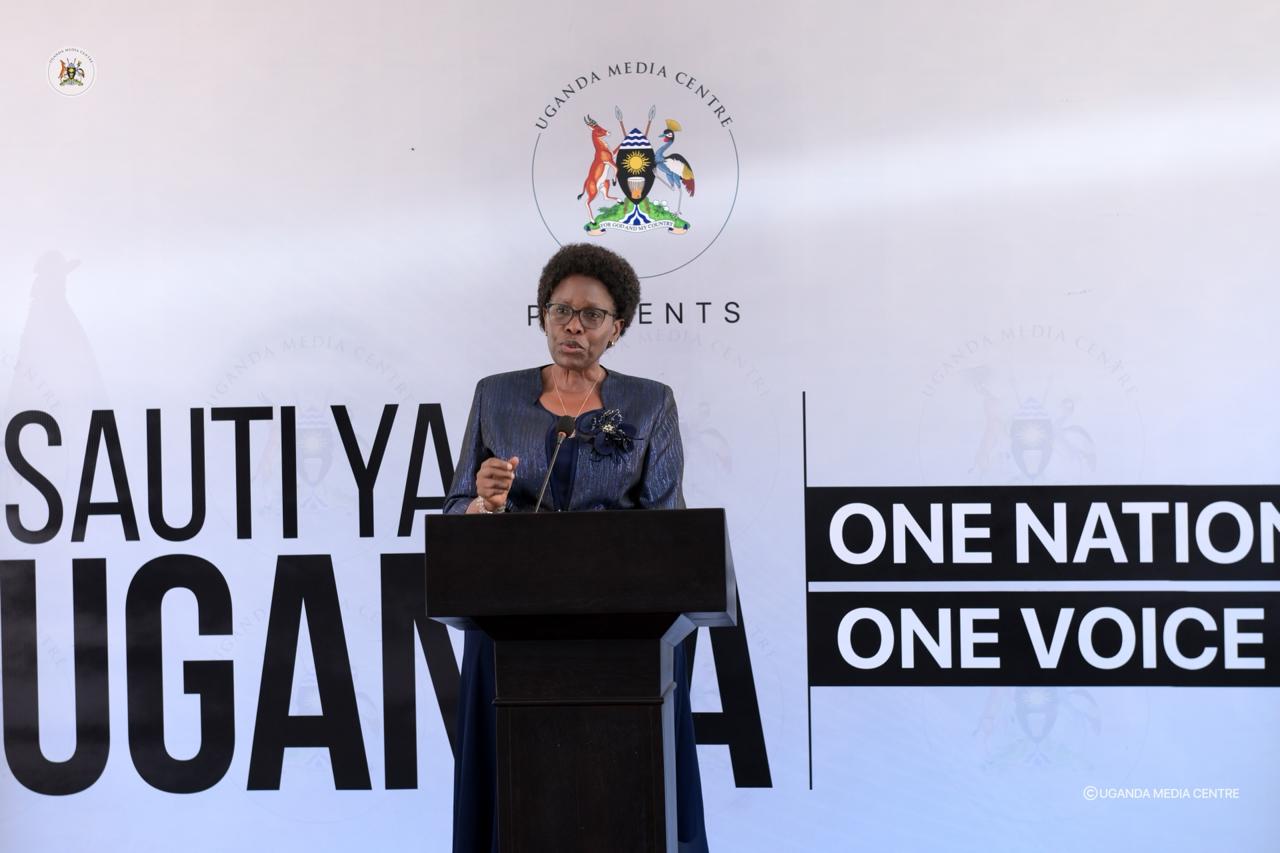

Lands, Housing and Urban Development Minister Judith Nabakooba has called for increased investment in women-led edible insect farming, saying the emerging enterprise can boost household incomes, improve nutrition and help address waste management.
Ms Nabakooba, who is also the Woman MP for Mityana District, said insect farming should be integrated into Uganda’s development programmes because of its potential to support agro-industrialisation, create jobs and promote climate-smart agriculture.
She was speaking on August 26 at Das Berliner Hotel in Bulenga, Wakiso District, during an international conference on improving nutrition and incomes among refugee and host communities in East Africa through edible insect production.
The conference brought together government officials, researchers, development partners, private-sector players, women farmers and cooperative leaders under the Refugee Insect Production for Food and Feed (REFIPRO) consortium.
Ms Nabakooba highlighted the Mityana Women Insect Farmers’ Cooperative, which she said has more than 268 member households and more than 40 young people.

The cooperative was established following work by Mothers Against Malnutrition and Hunger (MAMAH) at its research and farmer-training centre in Lulagala Village, Nakibanga Parish, Mityana.
Members rear insects, including Black Soldier Fly larvae, for income and as an affordable source of protein for poultry, pigs, fish and other livestock.
“To the women of this cooperative, I want to say today: we see you, we recognise your courage, and we celebrate what you are building,” Ms Nabakooba said.
She said insect farming shows that rural women do not necessarily need large pieces of land or huge amounts of capital to become entrepreneurs.
“With the right knowledge, organisation, technology, access to finance and markets, women can turn locally available resources into productive businesses,” she said.
Ms Nabakooba said the high cost of animal feed remains a major challenge for poultry and livestock farmers, adding that locally produced insects could replace some conventional protein ingredients.
She said this could reduce production costs, improve the profitability of poultry and fish enterprises and keep more money within local economies.
The minister also linked insect farming to waste management, saying organic waste from markets, restaurants and agro-processing businesses could be converted into animal protein and organic fertiliser.
She urged municipalities and urban authorities to promote the separation of organic waste from plastics and other contaminants to create a reliable supply of clean material for insect farmers.
Ms Nabakooba further called for stronger farmer cooperatives, saying organised farmers are better placed to aggregate production, access finance, maintain quality standards and reach larger markets.
She urged government and development partners to support viable farmer groups with extension services, technology, financing, certification and market linkages.
She cautioned against initiatives that depend entirely on donor funding, saying the success of REFIPRO and similar projects should ultimately be measured by whether farmers can sustain their businesses after external support ends.
“The real test of REFIPRO and similar initiatives is whether farmers remain productive after project funding ends,” she said.
Ms Nabakooba commended MAMAH and REFIPRO partners, including RAISE, the University of Copenhagen, Makerere University, BOBO Eco Farm and the International Centre of Insect Physiology and Ecology (ICIPE), for combining research, community knowledge and innovation to promote livelihoods and nutrition.